If you’ve lived in Downingtown for any length of time, you already know the housing stock here is all over the map.
A stone farmhouse on the east side of town has almost nothing in common with a 2015 build off Boot Road — and yet somehow, both homeowners end up standing in their bathroom thinking the same thing: this isn’t working anymore.
It could be a layout that made sense in 1955 but doesn’t fit how your family actually uses the space.
It could be finishes that were outdated before you even moved in.
Or it could just be that slow realization — the one that hits around year three of “learning to live with it” — that you’re done compromising.
You’re not alone, and you’re not being dramatic.
The bathroom is one of the hardest-working rooms in your house, and when it doesn’t fit your life (or your home’s character), you feel it every single morning.
This guide is built specifically for Downingtown homeowners.
Not generic Pinterest inspiration — actual bathroom styles that make sense for the types of homes in this area, the conditions we deal with in Chester County, and the practical realities of renovating properties that range from pre-war gems to brand-new construction.
We’ll walk through what works, what doesn’t, and how to make smart decisions based on the home you actually have — not the one on your mood board.
Let’s get into it.
Understanding Downingtown’s Housing Landscape
Downingtown’s housing stock tells the story of a community that’s been growing for over 300 years. That history is what makes bathroom design here so specific. What works in a fieldstone Colonial off Lancaster Avenue won’t necessarily translate to a new build near Marsh Creek. Before you commit to a style, you need to understand what your home is actually asking for.
What Types of Homes Dominate Downingtown?
The short answer: a little bit of everything. Colonials are the most common architectural style in the area, but Cape Cods and ranches show up consistently too, especially in neighborhoods built out during the mid-century suburban expansion. You’ll also find split-levels from the ’70s and ’80s, Queen Anne and Federal-era homes in the older pockets of the borough, and fieldstone and limestone structures that date back to the 1700s.
Then there’s the newer wave. Builders like Toll Brothers, Ryan Homes, and Keystone Custom Homes have been active throughout the Downingtown area over the past two decades, adding contemporary colonials, craftsman-style homes, townhouse communities, and 55+ developments like Brandywine Walk. These homes brought modern floor plans and updated bathroom configurations, but even they have room for improvement once builder-grade finishes start showing their age.
Each of these home types presents a different bathroom starting point, and choosing the wrong style for the house you’re in is one of the most common mistakes we see.
Typical Bathroom Sizes and Configurations
In Downingtown’s older homes, bathrooms tend to be small and tightly configured. The classic 5×8 layout is standard in most pre-war and mid-century builds, with a tub/shower combo, single vanity, and toilet sharing a footprint that doesn’t leave much room for creativity. Homes built before indoor plumbing was standard often have bathrooms that were retrofitted after original construction, which means the layouts can feel forced into spaces that weren’t designed for them.
Newer construction tells a different story. Primary suites with double vanities, walk-in showers, and separate soaking tubs are common in recent developments. But even in these homes, secondary bathrooms and powder rooms are often afterthoughts, built to a price rather than a standard.
Construction Eras and What They Mean for Your Bathroom
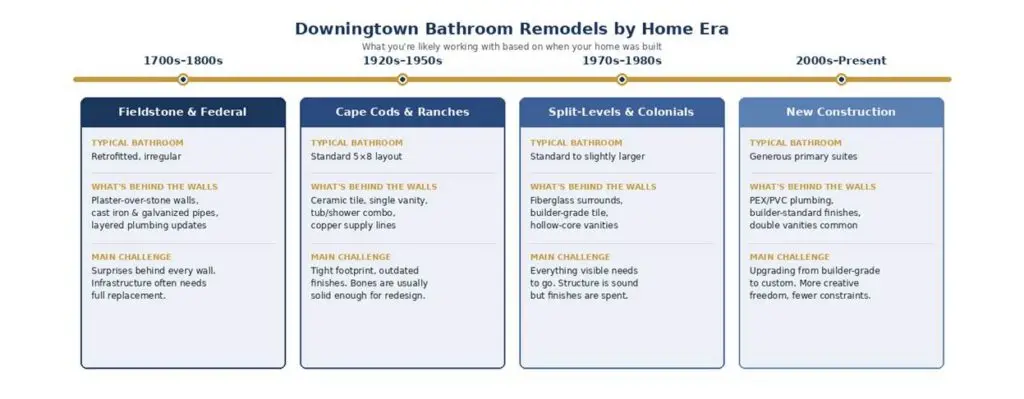
The era your home was built in determines a lot more than aesthetics. Downingtown’s oldest homes, the fieldstone and limestone structures from the 1700s and 1800s, often have plaster-over-stone walls, irregular framing, and plumbing that’s been updated in layers over the decades. Renovating these bathrooms requires understanding what’s behind the walls before you start making design decisions.
Homes from the 1950s through 1980s are more predictable structurally but typically feature builder-grade everything. Fiberglass tub surrounds, basic tile, and vanities that were functional 40 years ago but don’t meet today’s expectations. The good news is the infrastructure is usually sound enough to support a full redesign without major structural work.
New construction from the last 20 years is the most straightforward to renovate, but “straightforward” doesn’t mean “thoughtless.” The challenge here is usually about upgrading from builder-standard finishes to something that feels custom and intentional.
What Downingtown Buyers Expect
Even if you’re not planning to sell anytime soon, it’s worth knowing what moves the needle in this market. Downingtown is a competitive area with strong demand across price points, and an updated bathroom adds real value at every level. But the key word is “appropriate.”
A bathroom that feels overbuilt for the house it’s in can be just as off-putting to buyers as one that’s outdated. The goal is a style that matches the home’s character and meets the expectations of the neighborhood. We’ll get deeper into that balance in the style sections ahead.
Downingtown’s Physical and Technical Realities
Bathroom style gets all the attention, but the technical side is what determines whether your remodel actually holds up five, ten, or twenty years from now. Downingtown has some specific conditions that should shape your material and design choices from the start.
Water and Plumbing Considerations
Downingtown’s municipal water comes from the Downingtown Municipal Water Authority, a system that’s been operating since 1895. The water is treated and generally meets federal standards, but hard water, iron contamination, and sediment buildup are all common issues throughout Chester County. If you’ve noticed mineral deposits on your current fixtures or a white film on your glass shower doors, that’s the local water quality making itself known.
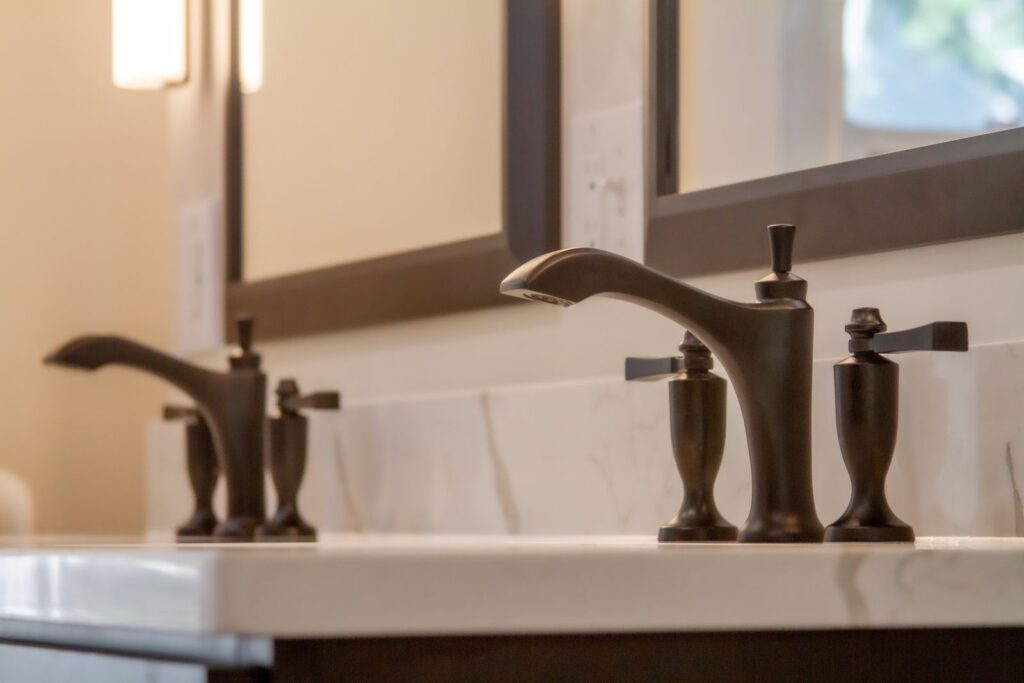
This matters for design decisions. Chrome fixtures show water spots and mineral buildup faster than brushed nickel or matte black finishes. Glass shower enclosures need consistent maintenance in hard water areas, and certain natural stones are more vulnerable to staining and etching when exposed to mineral-heavy water over time. None of this means you can’t use those materials. It just means you should choose with your eyes open.
On the plumbing side, the age of your home dictates what you’re working with. Older Downingtown properties may still have galvanized steel or even cast iron supply and drain lines. Homes from the ’70s and ’80s likely have copper supply lines, which hold up well but can develop pinhole leaks as they age. Newer construction typically features PEX and PVC, which are the most forgiving for renovation work. Knowing what’s in your walls before you start designing can save you from expensive surprises mid-project.
Structural Factors
Most homes in the Downingtown area are built over basements, which is generally good news for bathroom renovation. Basement construction gives you access to plumbing from below, making fixture relocation more feasible than it would be on a slab foundation. That said, older homes come with their own structural realities. Irregular joist spans, load-bearing walls in unexpected locations, and subfloors that weren’t designed for heavy tile or stone installations all need to be evaluated before a bathroom project gets underway.
If you’re considering a large-format tile floor or a freestanding soaking tub, the subfloor may need reinforcement. A full cast iron tub filled with water and a person in it can weigh over 1,000 pounds concentrated in a small area. That’s not something you eyeball.
Ventilation and Moisture Challenges
Chester County sits in a humid subtropical climate zone. Summers bring consistent humidity in the 70-75% range, and even winter months hover around 60-65%. That year-round moisture load means bathroom ventilation isn’t optional in Downingtown homes. It’s essential.
Older homes in the area often have undersized or poorly positioned exhaust fans, and some don’t have mechanical ventilation at all, relying on a window that rarely gets opened in January. Inadequate ventilation leads to mold growth, peeling paint, warped trim, and deteriorating grout, problems that can undermine an otherwise well-executed remodel within a few years.
Any bathroom renovation in this climate should include a properly sized exhaust fan (measured in CFM based on the room’s square footage), ducted to the exterior rather than into the attic. It sounds basic, but it’s one of the most overlooked details in bathroom remodels, and one of the most consequential.
How Local Conditions Affect Material Performance
All of this connects back to material selection, which we’ll cover in detail later. But the short version is that Downingtown’s combination of hard water, high humidity, and temperature swings between seasons creates an environment that punishes cheap materials and rewards smart ones. Porous natural stone that isn’t properly sealed will stain. Low-quality grout will crack and mold. Builder-grade caulk will yellow and peel within a year or two.
The conditions here aren’t extreme, but they’re demanding enough that material choices made during the design phase will determine how your bathroom looks and performs long after the project is finished.
What Downingtown Homeowners Are Actually Dealing With
Every bathroom remodel starts with a frustration. Sometimes it’s aesthetic, but more often it’s functional, something about the space that just isn’t working the way it should. Here’s what we hear most often from homeowners in the Downingtown area.
The Most Common Complaints
The number one issue, across nearly every home type in the area, is space. Downingtown homeowners are dealing with bathrooms that feel too small for how they actually live. A 5×8 bathroom with a tub you never use, a vanity with no storage, and a door that swings into the toilet isn’t just annoying. It’s a daily source of friction.
Right behind that is outdated finishes. Almond-colored fixtures, patterned linoleum, brass hardware from the ’90s, textured ceiling paint that traps moisture. These aren’t just cosmetic problems. They signal to anyone walking into the room that the space hasn’t been touched in decades, and they drag down the feel of the entire home.
Functional Problems Beyond Aesthetics
The stuff you can see is only part of the picture. A lot of Downingtown homeowners are also dealing with issues that run deeper than surface-level style choices.
Water pressure inconsistencies are common, especially in older homes where supply lines have narrowed over time due to mineral buildup or corrosion. Poor lighting is another frequent issue. Many older bathrooms in the area rely on a single overhead fixture that casts shadows across the vanity, making the room feel smaller and darker than it needs to be.
Storage is a big one too. Older bathroom layouts rarely accounted for the amount of products and supplies a modern household needs access to. A pedestal sink looks nice in a catalog, but when there’s nowhere to put anything, the room ends up cluttered regardless of how good the design looks on paper.
Pain Points by Home Era
The specific frustrations tend to track with the age of the home. In Downingtown’s oldest properties, the challenge is usually infrastructure. Homeowners are dealing with plumbing that’s been patched and rerouted multiple times, walls that aren’t plumb, and floors that aren’t level. The bathroom may have been functional when it was added, but decades of wear and incremental fixes have compounded into a space that needs a ground-up rethink.
In mid-century and ’80s-era homes, the structure is usually fine but everything visible has run its course. These are the bathrooms full of fiberglass surrounds, hollow-core vanities, and tile that was trendy once and now just looks tired. The good news is these remodels tend to be the most straightforward because the bones are solid.
In newer construction, the pain points are subtler. Builder-grade finishes that looked fine on move-in day start to show wear quickly. Thin countertops chip. Basic tile grout discolors. Cabinet hardware loosens. The home is only 10 or 15 years old, but the bathroom already feels like it belongs to a lesser version of the house.
What’s Actually Driving Remodel Decisions
It’s rarely just one thing. Most Downingtown homeowners we talk to have been thinking about their bathroom for a while before they actually pick up the phone. The trigger is usually a combination of accumulated frustration and a specific catalyst: getting ready to sell, finishing another part of the house and realizing the bathroom doesn’t match, a plumbing issue that forces the conversation, or simply reaching the point where “I’ll deal with it later” stops being convincing.
Whatever the trigger, the goal is almost always the same. Homeowners want a bathroom that works better, looks better, and feels like it belongs in their home. The style question, which is what we’ll tackle next, is how you get there.
Bathroom Styles That Work in Downingtown Homes
This is where the fun starts, but it’s also where a lot of homeowners get tripped up. The best bathroom design for your home isn’t necessarily the one you saved on Instagram. It’s the one that respects your home’s architecture, works with the physical conditions we just covered, and still gives you a space that feels fresh and personal.
Here’s how the major style categories break down for Downingtown properties.
Traditional Styles for Historic Properties
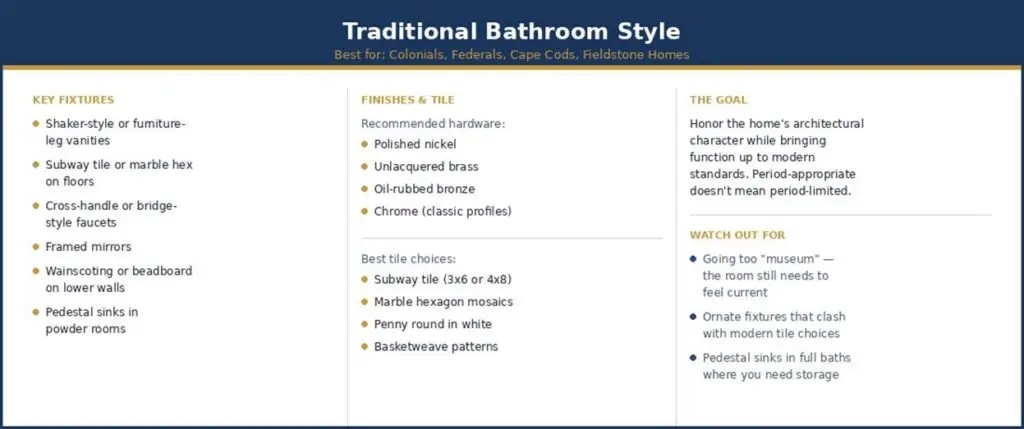
If you’re in a Colonial, a Federal-era home, a Cape Cod, or one of the older fieldstone properties in the area, a traditional bathroom style is your most natural starting point. That doesn’t mean dated. It means design choices that honor the character of the house while bringing the function up to modern standards.
Think subway tile or marble hex on the floor. Framed mirrors instead of frameless. Furniture-style vanities with legs rather than floating boxes. Fixtures with some detail to them, cross-handle faucets or bridge-style hardware in polished nickel or unlacquered brass. Wainscoting or beadboard on the lower walls works beautifully in these homes and ties the bathroom to the rest of the house architecturally.
The key with traditional design is restraint. You’re not recreating a museum. You’re pulling visual cues from the home’s existing character and translating them into a bathroom that still has hot water on demand, proper lighting, and a shower that actually works the way you need it to. Period-appropriate doesn’t have to mean period-limited.
One place where traditional Downingtown homes benefit from a modern upgrade is the tub-to-shower conversation. A lot of these older homes have a single bathtub that takes up valuable real estate in an already tight bathroom. If nobody in the house is using that tub, converting it to a walk-in shower can completely change how the room functions without fighting the home’s character.
Modern Design for Contemporary Homes
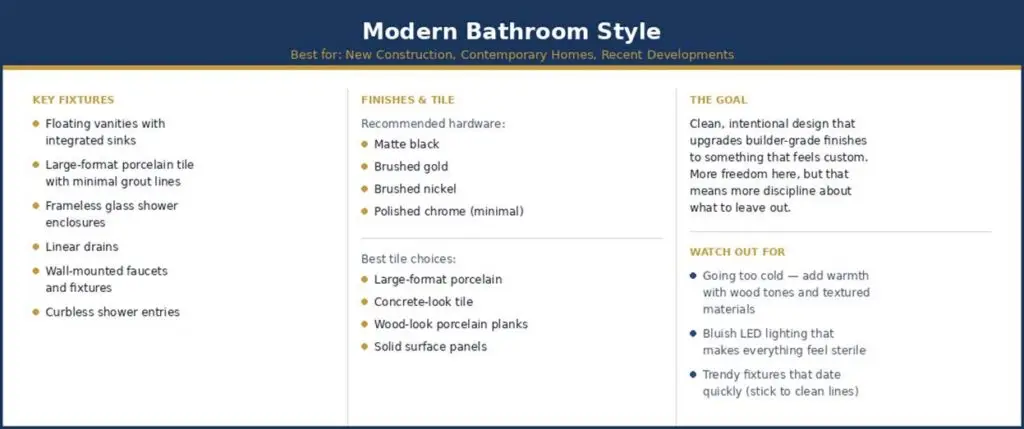
If your home was built in the last 15 to 20 years, or if you’re in one of the newer developments in the Downingtown area, modern bathroom design is a natural fit. The architecture already supports it. Clean lines, open floor plans, and neutral palettes are baked into how these homes were built, and your bathroom should speak the same language.
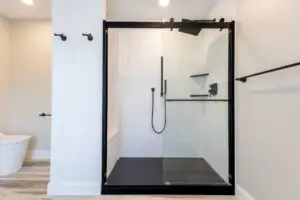
Modern bathroom design leans on simplicity. Large-format porcelain tile with minimal grout lines. Floating vanities with integrated sinks. Frameless glass shower enclosures. Linear drains. Wall-mounted fixtures. Matte black or brushed gold hardware used sparingly for contrast rather than decoration.
The risk with modern design is going too cold. A bathroom that looks like a showroom photograph but doesn’t feel warm or inviting is a common miss. The fix is usually textural. Wood-look porcelain on the floor or an accent wall. A natural stone vanity top to break up the manufactured surfaces. Warm LED lighting at 2700K instead of the bluish daylight tones that make everything feel sterile.
If you’re working with a newer home and looking to upgrade the primary bathroom, modern design gives you the widest range of options because you’re not working around architectural constraints. The challenge is editing. Having more freedom means you need more discipline about what to leave out.
Transitional: The Sweet Spot for Many Downingtown Homes
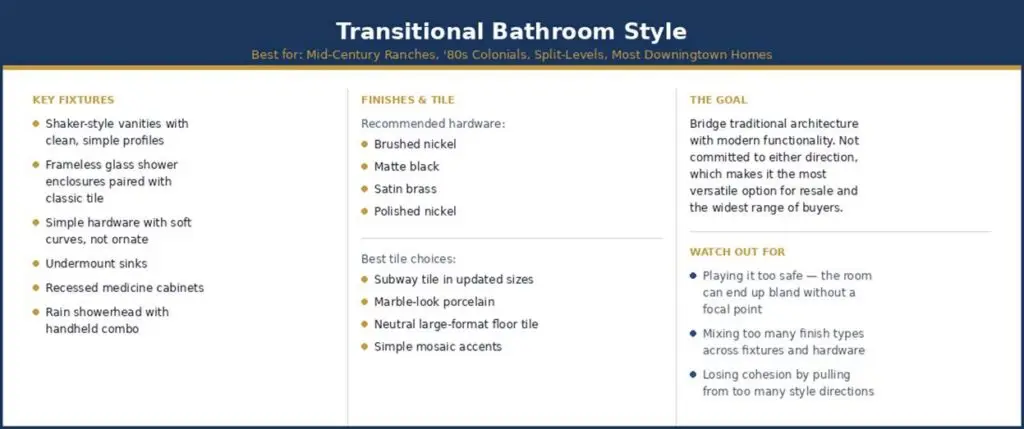
Transitional design borrows from both traditional and modern vocabularies, and it’s arguably the most versatile approach for the Downingtown market. If your home doesn’t fall neatly into “historic” or “new construction,” or if you just want something that splits the difference between classic and contemporary, this is probably where you’ll land.
A transitional bathroom might pair a shaker-style vanity with a frameless glass shower enclosure. Or combine subway tile with a modern matte black rain showerhead. The fixtures tend to be simple but not stark, with soft curves and clean profiles that don’t commit too hard in either direction.
This style works especially well in Downingtown’s large stock of mid-century ranches, ’80s colonials, and split-levels. These homes don’t have a strong period identity that demands a specific aesthetic, which actually makes them easier to work with from a design standpoint. You’re not trying to match anything. You’re creating a bathroom that feels intentional and cohesive on its own terms.
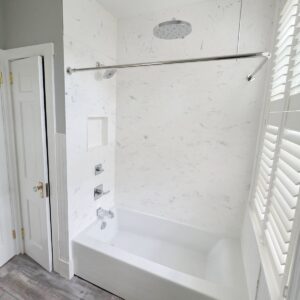
Transitional design also tends to hold its resale value well because it appeals to the widest range of buyers. It doesn’t alienate someone who leans traditional, and it doesn’t feel outdated to someone who skews modern. For homeowners who want a bathtub remodel or are considering whether to keep the tub or convert to a shower, transitional design gives you the flexibility to go either direction without the room feeling disjointed.
Material Selection for Downingtown Conditions
Choosing materials for a bathroom remodel is where aesthetics and practicality either come together or fall apart. In Downingtown, the local conditions we covered earlier (hard water, seasonal humidity swings, and the realities of older home construction) should have a real say in what goes on your walls, floors, and countertops.
Tile and Stone That Perform Well Here
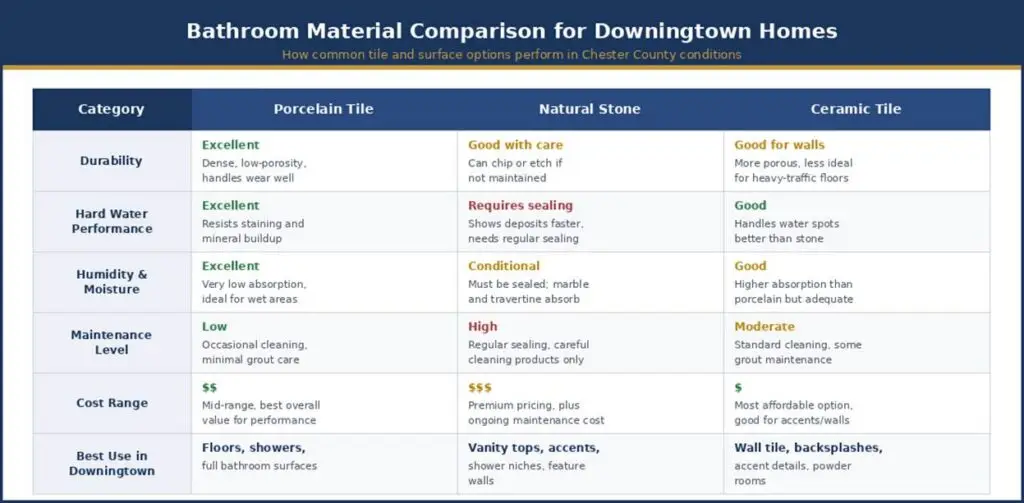
Porcelain tile is the workhorse of Downingtown bathroom remodels, and for good reason. It’s dense, low-porosity, and handles moisture and temperature changes without cracking or staining. Large-format porcelain in particular has become a go-to because fewer grout lines means less maintenance and a cleaner visual. It comes in finishes that convincingly replicate marble, concrete, wood, and natural stone without any of the upkeep headaches.
Ceramic tile still has its place, especially for walls and accents where it won’t take the same abuse as a floor. It’s more affordable than porcelain and available in a huge range of styles, but it is more porous and less durable underfoot over time.
Natural stone (marble, travertine, slate) is beautiful and adds undeniable character, especially in traditional or transitional Downingtown bathrooms. But it demands commitment. Marble etches when exposed to acidic products and stains if it isn’t sealed regularly.
In a hard water area like Chester County, mineral deposits show up faster on natural stone surfaces than on porcelain. If you love the look, use it strategically: a vanity top, a shower niche accent, or a feature wall rather than floor-to-ceiling coverage that becomes a maintenance burden.
Finishes That Handle Local Water Quality
Fixture finishes take a beating from hard water, and some hold up better than others. Polished chrome is the most affordable option but also the least forgiving. Every water spot and mineral deposit shows immediately, which means constant wiping or a perpetually spotted faucet.
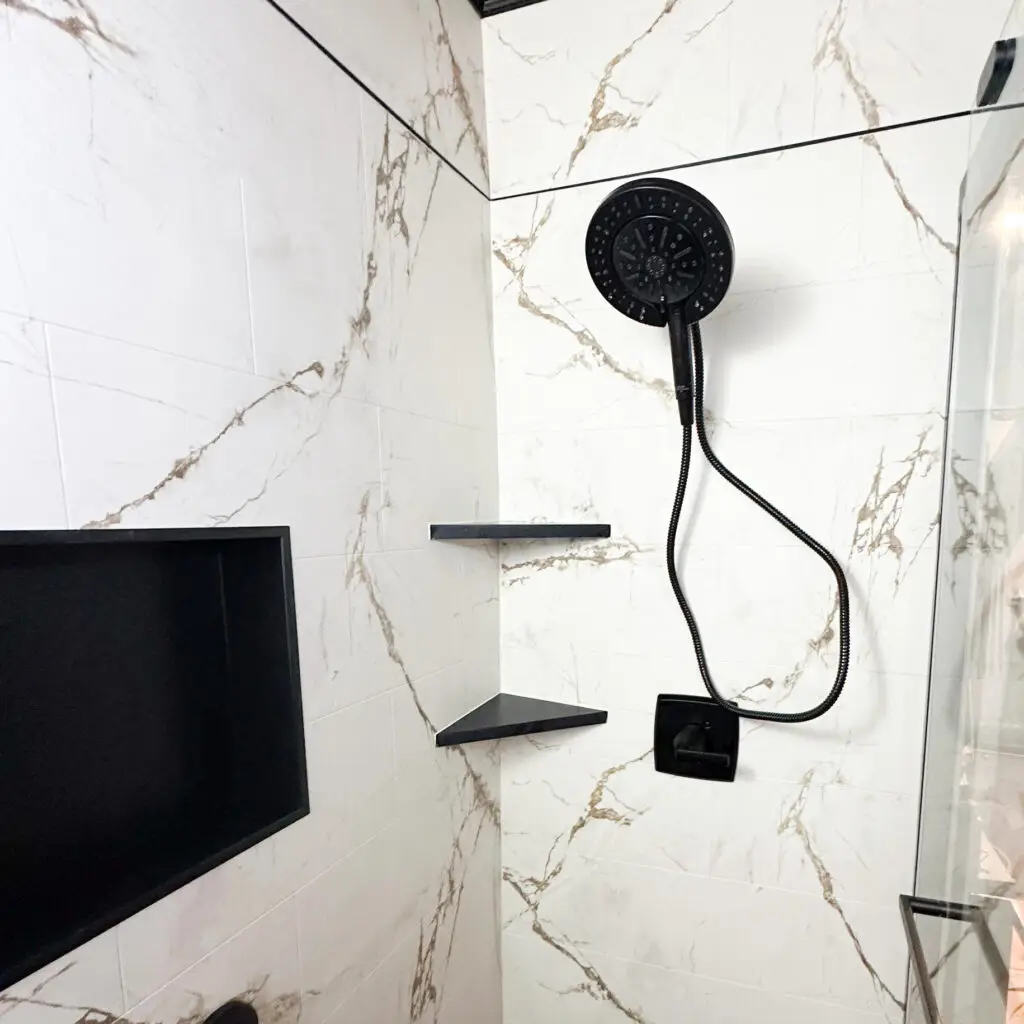
Brushed nickel and satin nickel are more practical for Downingtown’s water conditions. The texture of the finish masks minor water spots and fingerprints, which means the fixtures look clean longer between wipe-downs. Matte black has surged in popularity and handles hard water reasonably well, though soap residue and dried water droplets can leave a visible film if the finish isn’t maintained.
Unlacquered brass is a strong choice for traditional and transitional bathrooms. It develops a natural patina over time that actually benefits from the mineral content in the water rather than fighting it. It’s not for everyone aesthetically, but from a performance standpoint, it’s one of the most forgiving options in this market.
Materials That Match Market Expectations
What you spend on materials should align with the home and the neighborhood. In a Downingtown home, porcelain tile, quartz countertops, and quality fixtures from brands like Delta, Moen, or Kohler will meet and exceed buyer expectations. You don’t need imported marble to make a strong impression at this price point.
As home values climb into the $600K and above range, buyers start noticing the details. Thicker countertop profiles, tile layouts with intentional patterning, upgraded shower systems, and hardware that feels substantial rather than hollow. The materials don’t necessarily need to be exotic, but the execution needs to feel deliberate.
At every price point, quartz has become the default countertop material for good reason. It’s nonporous, doesn’t require sealing, resists staining from hard water and everyday products, and comes in enough color and pattern options to work with any style. Granite still has its fans, but quartz has largely taken over in the Downingtown renovation market because it performs better with less effort.
What to Avoid Based on Actual Performance
A few materials consistently underperform in Chester County bathrooms, and they’re worth calling out.
Cultured marble vanity tops look decent initially but yellow and scratch over time, especially in hard water areas. They’re a common builder-grade inclusion that’s almost always worth upgrading during a remodel.
Peel-and-stick tile and vinyl plank in wet areas are tempting from a cost standpoint but tend to fail at seams and edges when exposed to sustained moisture. They can work in a powder room that sees minimal water, but inside a shower or directly around a tub they’re a shortcut that usually shows within a year or two.
Glass mosaic tile in large shower applications looks stunning in photos but is a grout maintenance nightmare, especially in hard water. The sheer number of grout lines creates surface area for mineral buildup and mold that most homeowners aren’t prepared to keep up with. If you want the look, use it as a contained accent strip or niche detail rather than a full shower wall.
Optimizing Bathroom Layouts in Downingtown Homes
You can pick the perfect tile, the right fixtures, and a style that fits your home beautifully. But if the layout doesn’t work, none of it matters. How the room is arranged determines how it feels to use every single day, and in Downingtown, layout challenges are one of the biggest reasons people start thinking about a remodel in the first place.
Common Layout Challenges by Home Type
In older Downingtown homes, the most frequent layout issue is a bathroom that was squeezed into a space it was never meant to occupy. Pre-war homes and early 20th century builds often had bathrooms added as indoor plumbing became standard, which means the room was carved out of a former closet, hallway, or corner of a bedroom.
The result is an awkward footprint where the door swings into the toilet, the vanity blocks the window, or you have to step sideways to get past the tub.
Mid-century ranches and Cape Cods have a different problem. The bathrooms were purpose-built, but they were designed for a different era of expectations. A single full bathroom serving the entire household was considered adequate in 1960. It’s not anymore.
In newer homes, the layouts are more generous but not always more thoughtful. Oversized primary bathrooms with wasted open floor space, poorly positioned shower entries, or double vanities that crowd the toilet area are all common in builder-grade construction. More square footage doesn’t automatically mean a better layout.
Space-Maximizing Solutions That Don’t Require Major Structural Work
The good news is that a lot of layout problems can be solved without moving walls or rerouting major plumbing runs.
Swapping a swing door for a pocket door or a barn-style slider instantly recovers usable floor space in tight bathrooms. It’s a relatively simple change that makes a disproportionate difference in a 5×8 room.
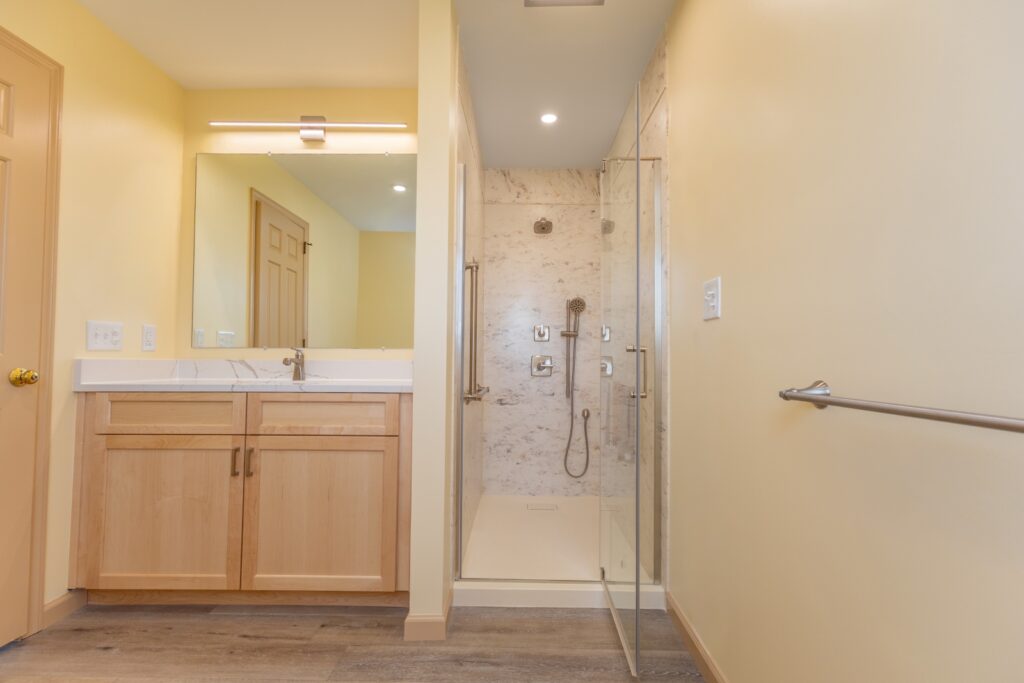
Replacing a built-in tub with a walk-in shower is one of the single most impactful layout moves in smaller Downingtown bathrooms. A standard tub takes up roughly 15 square feet. Converting that to a shower with a glass enclosure opens the room visually even if the actual footprint doesn’t change much.
For homeowners who haven’t used their tub in years, it’s a straightforward way to get more function out of the same space, and it’s worth understanding the cost before assuming it’s out of reach.
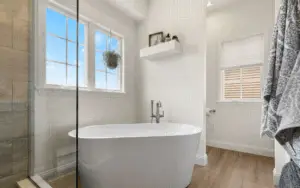
Going the other direction works too. If you’ve got a shower-only bathroom but want soaking capability, a shower-to-tub conversion can make sense, particularly in a family bathroom where kids need a tub.
The cost of that conversion is often comparable, and the right tub selection can actually improve the layout rather than cramping it.
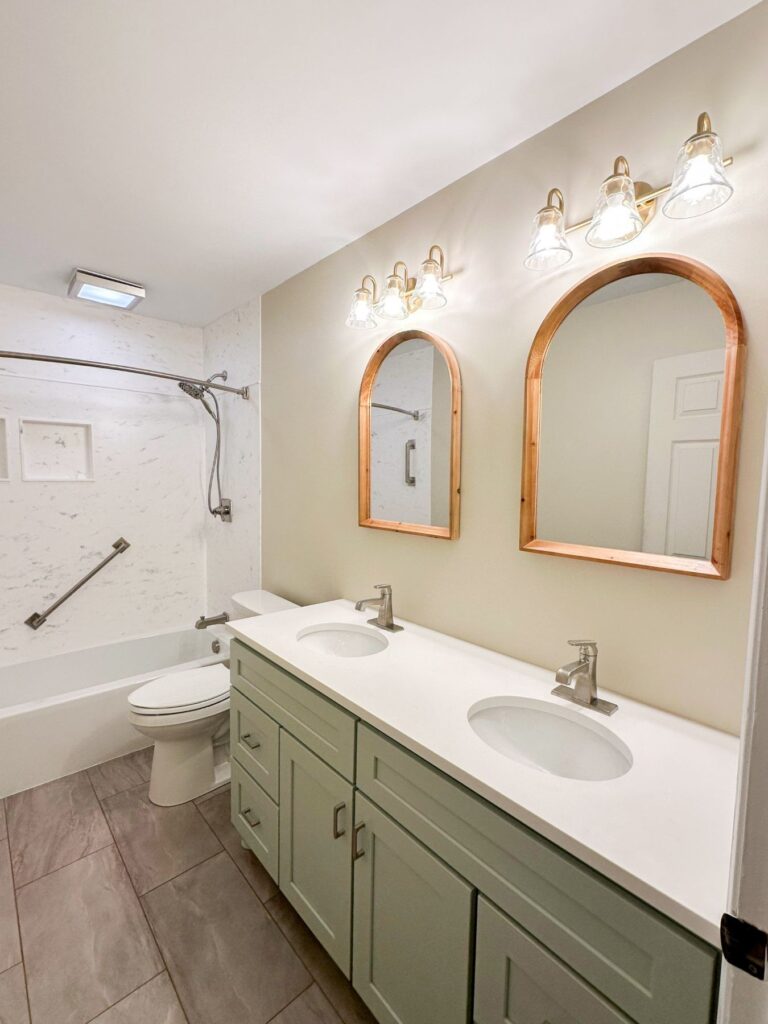
Recessed medicine cabinets, wall-mounted vanities, and corner-mounted fixtures can all create breathing room without touching the plumbing. Even something as simple as moving the towel bar to the back of the door or adding a recessed niche in the shower wall reduces visual clutter and makes a small room feel less packed.
When Fixture Relocation Makes Sense
Sometimes working within the existing plumbing layout isn’t enough. If the current configuration forces compromises that a simple fixture swap can’t fix, relocating the toilet, vanity, or shower may be worth the additional investment.
The biggest factor in Downingtown is what’s below the bathroom. In homes with basements, plumbing access from below makes relocation significantly more feasible and less expensive than in homes with slab foundations or finished ceilings below. If your contractor can get to the drain lines without tearing out a finished ceiling downstairs, moving a toilet or shower drain becomes a practical option rather than a budget-breaker.
The general rule: if moving a fixture opens up a layout that fundamentally changes how the room works, it’s usually worth exploring. If it’s a marginal improvement, work with what you have and put the budget toward better materials and finishes instead.
Accessibility Considerations
Downingtown has a growing population of homeowners who are thinking about aging in place, particularly in the 55+ communities that have expanded throughout the area in recent years. But accessibility features aren’t just for older adults.
Curbless shower entries, comfort-height toilets, grab bars integrated into the design, and wider doorways are all features that make a bathroom easier to use for everyone, at every age.
The best time to build in accessibility is during a remodel, when the walls are open and the layout is being reconsidered anyway. Blocking behind the walls for future grab bar installation costs almost nothing during construction but saves a significant retrofit expense later. A curbless shower entry can be built into a modern or transitional design without any visual compromise.
These aren’t just smart decisions for daily life. They’re also selling points in a market where a growing number of buyers are thinking about long-term livability.
Mistakes We’ve Seen in Downingtown Bathroom Remodels
No one sets out to make bad decisions in a bathroom remodel. But certain choices that seem reasonable on paper don’t hold up in practice, especially when you factor in Downingtown’s housing stock, local conditions, and market dynamics. Here’s what we’ve seen go wrong often enough to be worth flagging.
Style Choices That Fight the House
This is the most common miss, and it’s usually well-intentioned. A homeowner falls in love with a design they saw online and tries to force it into a home that wasn’t built for it. An ultra-modern floating vanity and frameless glass enclosure in a 1920s Colonial. Heavy Tuscan tile and wrought iron in a mid-century ranch. A farmhouse aesthetic complete with shiplap in a contemporary townhouse.
None of these styles are bad on their own. But when the bathroom feels like it belongs in a completely different house, it creates a disconnect that’s hard to ignore. Buyers notice it too. A bathroom that clashes with the rest of the home reads as a project that was done without a plan, even if the materials and workmanship are perfectly fine.
The fix isn’t complicated. Walk through the rest of your home before you finalize a bathroom design. Look at the trim profiles, the door styles, the hardware. Your bathroom doesn’t need to be a carbon copy, but it should feel like it belongs in the same house.
Over-Improving Beyond Neighborhood Standards
Downingtown’s market spans a wide range, and where your home falls in that range should influence how far you go with a remodel. Installing a $40,000 spa bathroom in a home that’s valued in the mid-$300s doesn’t get that money back. It makes the house the most expensive listing on the block for all the wrong reasons.
This doesn’t mean you should cut corners or settle for something you don’t like. It means being honest about the ceiling. If every other home in your neighborhood has a clean, updated bathroom with solid materials and good fixtures, that’s your benchmark. Exceed it by a reasonable margin and you’ve added real value. Blow past it and you’ve spent money you’ll never recoup.
Material Shortcuts That Fail Locally
We touched on some of these in the materials section, but they’re worth repeating in this context because they show up constantly in remodels that were done on the cheap or without local knowledge.
Unsealed natural stone in a shower. Peel-and-stick products in wet areas. Builder-grade caulk instead of quality silicone. Grout that wasn’t rated for wet applications. Exhaust fans that vent into the attic instead of to the exterior. Each of these saves a little money or time upfront and creates a much bigger problem within a few years, especially in Chester County’s humidity.
The pattern is almost always the same: someone chose the faster or cheaper option during the build, and the homeowner is now living with mold, discoloration, peeling, or water damage that costs more to fix than doing it right would have cost in the first place.
Trends That Don’t Translate to Chester County
Not every national trend works in every market. A few that we’ve seen struggle specifically in Downingtown and the surrounding area:
Open-concept wet rooms look incredible in architectural magazines but require flawless waterproofing and drainage engineering that adds significant cost. In older homes with subfloor inconsistencies and settling, the risk of water finding its way somewhere it shouldn’t is real. For most Downingtown bathrooms, a well-designed walk-in shower with a proper threshold or linear drain achieves the same visual impact with a fraction of the risk.
All-white bathrooms photograph beautifully but show every speck of dirt, every water spot, and every grout line that’s starting to discolor. In a hard water area, an all-white bathroom is a commitment to constant cleaning that most homeowners underestimate.
Vessel sinks on top of the vanity counter create a splash zone and reduce usable counter space. They were trendy for a while, but in practical terms they’re a step backward from an undermount or integrated sink, especially in smaller Downingtown bathrooms where counter space is already limited.
Fixture Choices That Underperform With Local Water
Rainfall showerheads are popular for good reason, they feel great. But in areas with hard water and inconsistent water pressure, the experience can fall flat. Rainfall heads rely on even water distribution across a wide surface, and mineral buildup in the nozzles gradually reduces flow and creates uneven spray patterns. They need regular cleaning and descaling to perform the way they did on day one.
If you love the rainfall look, a handheld combo setup gives you the best of both worlds and lets you customize your shower experience based on what the water pressure is actually doing on any given day. It’s a more flexible choice for Downingtown’s water conditions, and it adds function that a fixed rainfall head alone can’t match.
Downingtown Bathroom Style FAQs
We get a lot of the same questions from homeowners in the Downingtown area, especially when they’re in the early stages of planning a remodel and trying to figure out where to start. Here are the ones that come up most often.
{ “@context”: “https://schema.org”, “@type”: “FAQPage”, “mainEntity”: [ { “@type”: “Question”, “name”: “What Bathroom Style Works Best in a Colonial Home?”, “acceptedAnswer”: { “@type”: “Answer”, “text”: “Traditional and transitional styles tend to work best in Downingtown’s Colonials. The goal is to complement the home’s existing architectural details rather than compete with them. Shaker-style vanities, subway tile, framed mirrors, and fixtures with simple but defined profiles all feel natural in a Colonial. That said, you don’t have to go full period reproduction. Mixing in a few modern elements, like a frameless glass shower enclosure or a contemporary light fixture, keeps the room from feeling like a time capsule as long as the overall palette stays cohesive.” } }, { “@type”: “Question”, “name”: “How Do I Know if My Bathroom Layout Needs to Change?”, “acceptedAnswer”: { “@type”: “Answer”, “text”: “If you find yourself working around the room rather than moving through it comfortably, the layout is probably the issue. The clearest signs are a door that hits a fixture when it opens, a vanity you can’t stand squarely in front of, or a shower entry that requires you to squeeze past the toilet. Sometimes the fix is as simple as swapping a swing door for a pocket door or replacing a tub with a walk-in shower. Other times the fixtures need to be repositioned entirely. A good contractor can tell you which scenario applies to your specific bathroom and what the cost implications look like before any work starts.” } }, { “@type”: “Question”, “name”: “Is It Worth Keeping a Bathtub or Should I Convert to a Shower?”, “acceptedAnswer”: { “@type”: “Answer”, “text”: “It depends on the bathroom and your household. If it’s your only bathroom with a tub and you have young children, keeping the tub makes sense both practically and for resale. If it’s a second or third bathroom and nobody’s used the tub in years, converting to a shower almost always improves the room’s functionality and opens up the layout. The reverse applies too. If your family needs a tub and you only have showers, a shower-to-tub conversion is a practical move. Either way, the decision should be based on how you actually use the room, not on assumptions about what buyers might want someday.” } }, { “@type”: “Question”, “name”: “What Fixture Finishes Hold Up Best With Hard Water?”, “acceptedAnswer”: { “@type”: “Answer”, “text”: “Brushed nickel, satin nickel, and matte black all perform well in Downingtown’s water conditions because their textures mask minor water spots and mineral deposits between cleanings. Polished chrome is the most affordable but shows everything immediately. Unlacquered brass is an underrated option for traditional bathrooms because its natural patina actually works with mineral content rather than against it. Whatever finish you choose, consistency matters. Pick one metallic family and carry it through the faucets, showerhead, hardware, and accessories so the room reads as a unified design.” } }, { “@type”: “Question”, “name”: “How Much Should I Spend on a Bathroom Remodel in Downingtown?”, “acceptedAnswer”: { “@type”: “Answer”, “text”: “There’s no single answer, but the guiding principle is to invest proportionally to your home’s value and neighborhood. Spending $15,000 to $25,000 on a well-executed bathroom remodel hits the sweet spot for most Downingtown homes. Going significantly above or below that range risks either under-delivering or over-improving for the market. The specifics depend on the scope of work, the materials you select, and whether the project involves structural or plumbing changes. Getting a detailed quote before finalizing your design is the best way to keep the budget aligned with the outcome.” } }, { “@type”: “Question”, “name”: “Do I Need a Permit for a Bathroom Remodel in Downingtown?”, “acceptedAnswer”: { “@type”: “Answer”, “text”: “In most cases, yes. Downingtown Borough and the surrounding townships require permits for work that involves plumbing changes, electrical modifications, or structural alterations. A cosmetic refresh where you’re swapping fixtures and finishes without moving anything typically doesn’t require a permit, but once you start relocating a toilet, adding a new shower line, or changing the electrical layout, permits come into play.” } } ] }What Bathroom Style Works Best in a Colonial Home?
Traditional and transitional styles tend to work best in Downingtown’s Colonials. The goal is to complement the home’s existing architectural details rather than compete with them. Shaker-style vanities, subway tile, framed mirrors, and fixtures with simple but defined profiles all feel natural in a Colonial.
That said, you don’t have to go full period reproduction. Mixing in a few modern elements, like a frameless glass shower enclosure or a contemporary light fixture, keeps the room from feeling like a time capsule as long as the overall palette stays cohesive.
How Do I Know if My Bathroom Layout Needs to Change?
If you find yourself working around the room rather than moving through it comfortably, the layout is probably the issue. The clearest signs are a door that hits a fixture when it opens, a vanity you can’t stand squarely in front of, or a shower entry that requires you to squeeze past the toilet.
Sometimes the fix is as simple as swapping a swing door for a pocket door or replacing a tub with a walk-in shower. Other times the fixtures need to be repositioned entirely. A good contractor can tell you which scenario applies to your specific bathroom and what the cost implications look like before any work starts.
Is It Worth Keeping a Bathtub or Should I Convert to a Shower?
It depends on the bathroom and your household. If it’s your only bathroom with a tub and you have young children, keeping the tub makes sense both practically and for resale. If it’s a second or third bathroom and nobody’s used the tub in years, converting to a shower almost always improves the room’s functionality and opens up the layout.
The reverse applies too. If your family needs a tub and you only have showers, a shower-to-tub conversion is a practical move. Either way, the decision should be based on how you actually use the room, not on assumptions about what buyers might want someday.
What Fixture Finishes Hold Up Best With Hard Water?
Brushed nickel, satin nickel, and matte black all perform well in Downingtown’s water conditions because their textures mask minor water spots and mineral deposits between cleanings. Polished chrome is the most affordable but shows everything immediately.
Unlacquered brass is an underrated option for traditional bathrooms because its natural patina actually works with mineral content rather than against it. Whatever finish you choose, consistency matters. Pick one metallic family and carry it through the faucets, showerhead, hardware, and accessories so the room reads as a unified design.
How Much Should I Spend on a Bathroom Remodel in Downingtown?
There’s no single answer, but the guiding principle is to invest proportionally to your home’s value and neighborhood. Spending $15,000 to $25,000 on a well-executed bathroom remodel hits the sweet spot for most Downingtown homes. Going significantly above or below that range risks either under-delivering or over-improving for the market.
The specifics depend on the scope of work, the materials you select, and whether the project involves structural or plumbing changes. Getting a detailed quote before finalizing your design is the best way to keep the budget aligned with the outcome.
Do I Need a Permit for a Bathroom Remodel in Downingtown?
In most cases, yes. Downingtown Borough and the surrounding townships require permits for work that involves plumbing changes, electrical modifications, or structural alterations. A cosmetic refresh where you’re swapping fixtures and finishes without moving anything typically doesn’t require a permit, but once you start relocating a toilet, adding a new shower line, or changing the electrical layout, permits come into play.
Find the Style That Fits Your Home
Every Downingtown home has a story, and the right bathroom remodel should feel like a natural part of it. Whether you’re working with a tight 5×8 in a mid-century ranch or rethinking the primary suite in a newer build, we’ll help you land on a design that makes sense for your home, your life, and the conditions in this area. Get your free quote today and let’s figure out what your bathroom should be.